Black Hole Explained: Unraveling Cosmic Mysteries Indexed
Original: What Is A Black Hole?
Discover the fascinating science behind a black hole, from its formation to its incredible gravitational pull. Unravel cosmic mysteries. Watch now!

watchJojo
How did this video make you feel?
Black Hole Explained: Unraveling Cosmic Mysteries
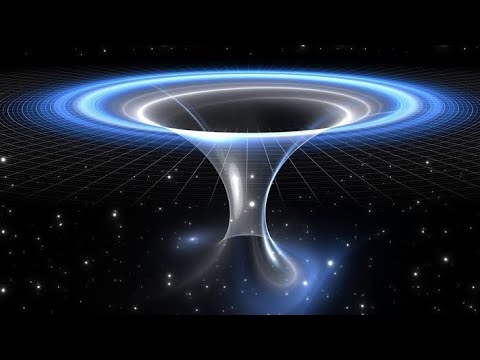
A black hole is one of the most enigmatic objects in the universe, captivating scientists and stargazers alike. These cosmic phenomena defy our everyday understanding of physics. They represent regions in spacetime where gravity is so intense that nothing, not even light, can escape. Consequently, they remain invisible to the naked eye.
Understanding a Black Hole
The concept of a black hole originates from Einstein's theory of general relativity. This theory predicts that when a massive star collapses at the end of its life, it can compress into an incredibly dense point. This point is known as a singularity. Furthermore, the gravitational field around this singularity becomes so powerful that it warps spacetime. This warping creates a boundary called the event horizon.
Beyond the event horizon, the escape velocity exceeds the speed of light. Therefore, anything crossing this boundary is inevitably pulled towards the singularity. This includes matter, energy, and even light itself. Scientists often describe black holes as cosmic vacuum cleaners, though they don't "suck things up" actively. Instead, objects fall in if they get too close.
The Science Behind Cosmic Giants
Black holes come in various sizes, each with unique characteristics. Understanding their formation and behavior helps us grasp the vastness of the cosmos. Moreover, they play a crucial role in the evolution of galaxies.
Stellar-Mass Black Holes: Relics of Giant Stars
These are the most common type of black hole. They form from the gravitational collapse of massive stars, typically those more than 20 times the mass of our Sun. When such a star exhausts its nuclear fuel, its core can no longer support itself against gravity. As a result, it collapses inward, leading to a supernova explosion. The remnant core, if massive enough, then forms a black hole. These can have masses ranging from a few times to dozens of times that of the Sun. They are often found in binary star systems, where they can pull material from a companion star.
Supermassive Black Holes: Galactic Cores
At the center of almost every large galaxy, including our own Milky Way, lies a supermassive black hole. These colossal objects can have masses millions to billions of times that of the Sun. Their origin is still a subject of intense research. However, they are thought to grow by accreting vast amounts of gas and dust. They also merge with other black holes during galactic collisions. These supermassive entities significantly influence the dynamics and evolution of their host galaxies. Their powerful gravitational pull shapes the orbits of stars and gas clouds around them.
Key Highlights
- Formation: Black holes are primarily formed from the collapse of massive stars.
- Event Horizon: This is the point of no return; beyond it, nothing can escape.
- Singularity: The infinitely dense point at the center of a black hole.
- Types: They range from stellar-mass to supermassive, with intermediate types also hypothesized.
- Gravity: Their gravitational pull is so extreme that even light cannot escape.
- Detection: Scientists detect them indirectly by observing their effects on nearby matter and light.
What Fans Are Saying
The cosmic wonder of black holes consistently sparks immense curiosity and discussion among enthusiasts. Many are fascinated by the extreme physics involved and the implications for space exploration. Furthermore, the sheer power and mystery surrounding these objects often lead to awe-inspired conversations online. People frequently express amazement at the universe's complexity and the incredible phenomena it harbors.
Conclusion
A black hole remains one of the most compelling and mysterious objects in the cosmos. Its extreme gravitational pull and ability to warp spacetime challenge our understanding of the universe. By continuing to study these incredible phenomena, we gain deeper insights into stellar evolution and galactic dynamics. We encourage you to watch the full video to further explore the fascinating world of black holes and their profound impact on the universe.
Frequently Asked Questions
What happens if you fall into a black hole?
If you were to fall into a black hole, you would experience extreme tidal forces, stretching you like spaghetti in a process called spaghettification, before crossing the event horizon and being pulled towards the singularity.
Can a black hole destroy Earth?
While a black hole has immense gravity, for Earth to be destroyed, it would need to come extremely close to one. Our solar system is not near any known black holes that pose a threat, and they do not actively "suck in" distant objects.
Related: trending viral videos · more viral short clips · Watch JoJo's main channel.

Recommended for you
Because you're watching
 2:26
2:26Do Wormholes Exist?
watchJojo
633 views • 5 years ago
 2:38
2:38Is Teleportation Possible?
watchJojo
848 views • 5 years ago
 2:21
2:21If Wormholes Exist, Is Time Travel Possible?
watchJojo
960 views • 5 years ago
 8:23
8:23Tips For Beautiful White Teet
watchJojo
1.1K views • 5 years ago
 1:59
1:59The Curious Case Of The White Lady
watchJojo
1.4K views • 6 years ago
 3:37
3:37Black Isn’t Black Anymore – Scientists Have Discovered A New Black That’s Freaking People Out!
watchJojo
2.1K views • 6 years ago
BROWSE BY YEAR
New, classic, and most loved
More like this
 6:16
6:16When This Girl Looked At Her Vacation Photos, She Noticed An Eerie Figure Who Was Watching Them
watchJojo
22.2K views • 8 years ago
 2:37
2:37Hiker Follows Strange Noises Inside Dark Mine Shaft, Freezes When He Sees Two Eyes
watchJojo
3.3K views • 5 years ago
 7:21
7:216 of the Most Baffling Unsolved Mysteries…
watchJojo
1.4K views • 5 years ago
 16:52
16:52The 8 Best Diet Plans — Sustainability, Weight Loss, and More
WatchJojo Health
82 views • 4 years ago
 2:28
2:28Can Space Tourism Lead to Space Settlement?
watchJojo
564 views • 4 years ago
 4:22
4:22Weight loss What is dry fasting and how does it work
WatchJojo Health
266 views • 5 years ago
 4:32
4:32The Terrifying Moment A Sea Turtle Swallowed A Fishing Hook
Watchjojo Animals
977 views • 6 years ago
 4:46
4:46Staircase to Nowhere’ Fascinating History Found in Hotel Makeover
watchJojo
921 views • 5 years ago
 9:45
9:45Healthy Eating Is Human Joys, Challenges, and 3 Things You Can Do
WatchJojo Health
72 views • 4 years ago