Heslington Brain Discovery Leaves Experts Speechless Indexed
Original: What Archaeologist Finds Inside Ancient Human Skull Leaves Experts Speechless
Discover the shocking Heslington Brain discovery, a 2,600-year-old human brain found intact. Learn why experts are speechless. Watch now!

watchJojo
How did this video make you feel?
Heslington Brain Discovery Leaves Experts Speechless
The incredible discovery of the Heslington Brain has truly left experts speechless, rewriting our understanding of ancient human remains. This remarkable find challenges previous beliefs about tissue preservation over millennia. It offers an unprecedented glimpse into the past, sparking immense scientific excitement.
The Astonishing Heslington Brain Discovery
In 2008, archaeologists in the British village of Heslington unearthed something extraordinary. They found a human skull containing a remarkably preserved brain, dating back over 2,600 years. This ancient artifact belonged to a man who lived between 673 and 482 BCE. He likely met a violent end, possibly from a fractured spine. Eventually, his severed head found its way into an oxygen-free clay pit.
The unique conditions of this burial site were crucial for its preservation. The clay mud created an anaerobic environment, preventing decay. This natural embalming process protected the delicate brain tissue for thousands of years. Consequently, the Heslington Brain provides an unparalleled opportunity for scientific study.
Scientists and medical professionals are particularly interested in this find. They hope to unlock secrets about ancient human biology and disease. Moreover, the brain's unique preservation offers insights into potential new ways to combat modern neurological conditions like dementia.
Unraveling the Mysteries of Ancient Preservation
The existence of the Heslington Brain raises fascinating questions about the processes of decomposition and preservation. It challenges conventional wisdom regarding how long soft tissues can survive. Understanding these mechanisms is vital for future archaeological endeavors.
How the Heslington Brain Defied Time
The key to the Heslington Brain's incredible survival lies in its specific burial conditions. The oxygen-free clay pit prevented bacterial decomposition. Furthermore, the brain itself underwent a unique chemical transformation. Researchers believe that proteins within the brain formed tightly packed structures. This process made the tissue more resilient to degradation over time. Therefore, the brain essentially became a natural, self-preserved artifact.
This natural process mirrors some modern preservation techniques. However, it occurred entirely without human intervention. The discovery highlights the importance of specific environmental factors in preserving organic matter. It also underscores the rarity of such finds, making the Heslington Brain even more significant.
Implications for Medical Research and Beyond
The study of the Heslington Brain offers profound implications for various fields. Doctors hope to analyze its cellular structure for clues about ancient diseases and brain health. For example, understanding how its proteins remained stable could inform research into neurodegenerative disorders. Additionally, archaeologists gain invaluable data about the diet and health of ancient populations. This single discovery has opened up entirely new avenues of scientific inquiry and collaboration.
Key Highlights
- Unprecedented Preservation: A 2,600-year-old human brain found intact within a skull.
- Unique Burial Conditions: Oxygen-free clay pit prevented decomposition of the delicate tissue.
- Scientific Marvel: Challenges long-held beliefs about soft tissue survival over millennia.
- Insights into Ancient Life: Provides clues about the health and demise of an Iron Age man.
- Potential Medical Breakthroughs: Study of its preservation may aid dementia research.
- Archaeological Significance: A rare and invaluable artifact for understanding ancient preservation.
What Fans Are Saying
The news of the Heslington Brain discovery has captivated audiences worldwide. People are expressing awe and wonder at the sheer improbability of such a find. Many are fascinated by the intersection of archaeology and medical science, eager to see what further insights this ancient brain will yield. The discussion often revolves around the mysteries of the past and the potential for groundbreaking discoveries from unexpected sources.
"It's astounding what history can reveal when conditions are just right. This brain is a true marvel!"
Conclusion
The Heslington Brain stands as a testament to the incredible power of natural preservation and the enduring mysteries of our past. Its discovery has not only left experts speechless but has also ignited new avenues of research across multiple scientific disciplines. This ancient artifact continues to offer unparalleled insights into human history and potential future medical breakthroughs. Do not miss the opportunity to learn more about this truly astonishing find and its global impact.
Frequently Asked Questions
How old is the Heslington Brain?
The Heslington Brain is approximately 2,600 years old, dating back to between 673 and 482 BCE.
What makes the Heslington Brain discovery so significant?
Its significance lies in the unprecedented preservation of soft brain tissue over millennia, challenging scientific understanding of decomposition and offering potential insights for modern medical research.

Recommended for you
Because you're watching

 Suggested3:31
Experts Solve Horrifying Secret After Excavating Skeletons In England
watchJojo
3.3K views • 6 years ago
 6:48
6:48Archaeologists Found The Perfectly Preserved Corpse Of A 350 Year Old French Noblewoman
watchJojo
23.6K views • 8 years ago
 6:12
6:122,000 Year Old Human Skeleton Found Near Shipwreck Could Help Scientists Solve Ancient Mystery
watchJojo
13.4K views • 8 years ago
 11:34
11:34Archaeological Discoveries That Will Blow Your Mind
watchJojo
1.8M views • 8 years ago
 3:21
3:21A 3 Year Old Saw That Her Baby Brother Had Stopped Breathing Then Doctors Realized What Was Wrong
watchJojo
13.9K views • 8 years ago
 4:37
4:37You Won't Believe What Scientists Found Inside This 95 Million Year Old Snake Skull!
watchJojo
1.4K views • 2 years ago
BROWSE BY YEAR
New, classic, and most loved
More like this
 3:41
3:4110,500-Year-Old Cremated Human Found in Germany!
Jojo Discovery
414 views • 3 years ago
 3:42
3:4210,500-Year-Old Human Burial Found in Germany!
Jojo Discovery
556 views • 3 years ago
 6:23
6:23When Archaeologists Dug Up These 2,800 Year Old Skeletons, They Couldn’t Believe Their Eyes
watchJojo
44.2K views • 8 years ago
 5:56
5:56After This Dog Refused To Leave His Goats In A Wildfire, Their Family Returned To Find A Miracle
watchJojo
69.1K views • 8 years ago
 3:30
3:30Mummies with Gold Tongues Unearthed at Ancient Egyptian Cemetery
Jojo Discovery
547 views • 3 years ago
 4:02
4:02Ancient Egyptian Tomb Opened for First Time in 2,500 Years
watchJojo
9K views • 5 years ago
 8:01
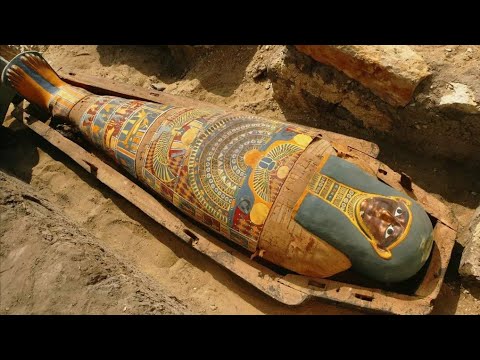
8:01Scientists Reconstructed An Egyptian Mummy’s Throat – And It Groaned From Beyond The Grave
watchJojo
2.2K views • 6 years ago
 3:54
3:54Liquid Blood Extracted From a 42,000 Years Old Foal Buried In Ice
watchJojo
4K views • 6 years ago
 5:29
5:29When Scientists Saw Inside This 350 Year Old Mummy’s Coffin, They Discovered That He Wasn’t Alone
watchJojo
624.8K views • 8 years ago