Heart Attack Warning Signs: 8 Crucial Signals Indexed
Original: One Month Before A Heart Attack, Your Body Will Warn You – Here Are The 8 Signs
Discover the crucial heart attack warning signs your body gives one month prior. Learn to recognize these vital signals. Watch now!

WatchJojo Health
How did this video make you feel?
Heart Attack Warning Signs: 8 Crucial Signals
Understanding heart attack warning signs is incredibly important. Your body often provides subtle signals weeks before a major cardiac event. Recognizing these early indicators can potentially save lives.
Understanding Heart Attack Warning Signs
A heart attack is a serious medical emergency. It occurs when the blood flow to a part of the heart is blocked. This blockage often happens due to a buildup of fat, cholesterol, and other substances forming plaques in the arteries. These plaques can rupture, forming a clot that obstructs blood flow.
Many people associate heart attacks with sudden, crushing chest pain. However, the reality is often more nuanced. Women and older adults, in particular, may experience atypical symptoms. These can be easily dismissed or attributed to less serious conditions. Therefore, being aware of a broader range of signals is crucial for early intervention.
Moreover, these warning signs don't always appear acutely. They can manifest gradually over several weeks. Paying attention to persistent or recurring symptoms is key. Early detection allows for timely medical evaluation and potentially life-saving treatment, improving outcomes significantly.
Deciphering Your Body's Signals
Recognizing Early Heart Attack Warning Signs
The body can send out distress signals well in advance of a heart attack. These signals are often subtle but consistent. For example, unusual fatigue is a common symptom. This isn't just everyday tiredness; it's an overwhelming exhaustion that doesn't improve with rest. Many individuals report feeling drained even after a full night's sleep. Additionally, sleep disturbances, such as insomnia or waking up frequently, can be linked to cardiovascular issues. Consequently, paying attention to changes in your energy levels is vital.
Another significant indicator can be shortness of breath. This might occur during light activity or even at rest. It's often accompanied by dizziness or lightheadedness. Furthermore, persistent discomfort in areas other than the chest is noteworthy. This includes pain radiating to the jaw, back, neck, or arms. These pains might be intermittent or constant. Recognizing these varied heart attack warning signs is essential for prompt medical attention.
The Importance of Subtle Symptoms
Subtle symptoms are often overlooked. However, they can be critical precursors. For instance, stomach pain, nausea, or indigestion can be mistaken for digestive issues. Yet, these can be signs of a heart problem, especially if they are new or unexplained. Sweating excessively without exertion, known as cold sweats, is another subtle but serious sign. This can indicate that your heart is working harder to pump blood.
Moreover, pressure or tightness in the chest, even without sharp pain, should not be ignored. This sensation might come and go. It can feel like an uncomfortable squeezing or fullness. Swelling in the ankles, feet, or legs, along with weight gain, can also point to fluid retention due to heart issues. Ultimately, any persistent, unusual, or new symptom warrants a medical check-up. These subtle changes can provide crucial lead time.
Key Highlights
- Unusual Fatigue: Experiencing extreme tiredness that doesn't resolve with rest.
- Shortness of Breath: Difficulty breathing during mild activity or while resting.
- Chest Discomfort: Pressure, tightness, or a squeezing sensation in the chest area.
- Pain in Other Areas: Discomfort radiating to the jaw, back, neck, arms, or stomach.
- Cold Sweats: Breaking out in a cold sweat without any physical exertion.
- Digestive Issues: Nausea, indigestion, or stomach pain without clear cause.
What Fans Are Saying
Many individuals are expressing gratitude for this vital information. They appreciate the detailed breakdown of symptoms often missed. There's a strong sentiment that awareness campaigns like this are incredibly helpful. People are sharing personal stories of how they or someone they know experienced atypical symptoms. Consequently, this discussion is fostering a greater understanding of heart health. The community emphasizes the importance of listening to your body and seeking professional advice.
"This article is a lifesaver. So many people ignore these signs!"
Conclusion
Ultimately, recognizing heart attack warning signs can be life-changing. Your body often provides crucial signals weeks before a major event. Paying close attention to persistent fatigue, shortness of breath, or unusual pains is paramount. Do not delay seeking medical attention if you experience any of these symptoms. Early detection and intervention are critical for positive outcomes. Stay informed and prioritize your heart health.
Frequently Asked Questions
What are the most common heart attack warning signs?
The most common heart attack warning signs include chest pain or discomfort, shortness of breath, pain in the left arm, and lightheadedness or nausea. However, symptoms can vary greatly among individuals.
How far in advance can heart attack warning signs appear?
Heart attack warning signs can appear as early as one month before a major cardiac event. These early signals are often subtle and can be easily dismissed, making awareness crucial.

Recommended for you
Because you're watching
 Suggested2:44
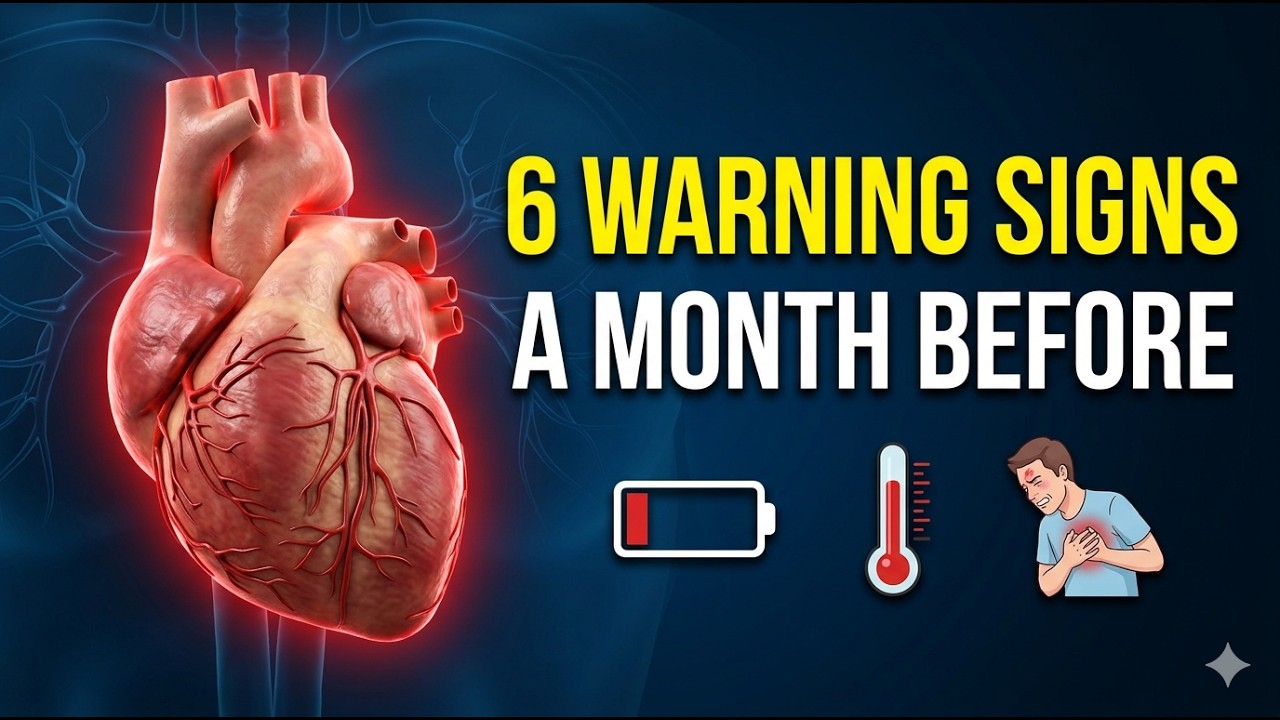
A month before a heart attack, your body will warn you of these 6 signs
WatchJojo Health
33 views • 7 months ago
 3:11
3:11The body's hidden danger signals this is how you know if something is wrong with your liver
WatchJojo Health
2.5K views • 6 years ago
 3:55
3:557 Early Warning Signs Of A Heart Attack Most Women Unknowingly Choose To Ignore
WatchJojo Health
573 views • 6 years ago
 3:28
3:28Your body warns you 7 signs that your body needs more iron immediately
WatchJojo Health
1.7K views • 6 years ago
 2:41
2:416 warning signs that your body contains too little vitamin D
WatchJojo Health
1.7K views • 6 years ago
 3:53
3:53Stroke Warning Signs Women Should Know Before It’s Too Late
WatchJojo Health
7.3K views • 8 years ago
BROWSE BY YEAR
New, classic, and most loved
More like this
 4:12
4:127 foods that clean your veins and protect you against heart attacks
WatchJojo Health
10.4K views • 6 years ago
 5:50
5:50High blood pressure: Learning the symptoms could save your life
WatchJojo Health
94 views • 7 years ago
 3:01
3:01Nurse Saves Her Own Life By Identifying Life Threatening Heart Condition Before Doctors
WatchJojo Health
246 views • 5 years ago
 6:13
6:13Types Of Headaches That Could Be An Early Warning Sign Of Something Very Dangerous
WatchJojo Health
1.3K views • 7 years ago
 3:17
3:17Early Warning Signs Of Cancer Most People Miss
WatchJojo Health
380 views • 7 years ago
 3:10
3:10This Blood Test Can Accurately Identify Alzheimer's 16 Years Before Symptoms Develop
WatchJojo Health
205 views • 5 years ago
 4:05
4:0510 things that happen to your body when you walk for 30 minutes every day
WatchJojo Health
1.1K views • 6 years ago
 3:02
3:02Eating 3 Or More Eggs A Week May Cause Early Death And Increase Risk Of Heart Disease, New Study Say
WatchJojo Health
212 views • 6 years ago
 2:59
2:59A few tablespoons of this every day can do wonders for the body
WatchJojo Health
1.7K views • 6 years ago